
Creative Team Building: The Human Skill AI Can’t Replace

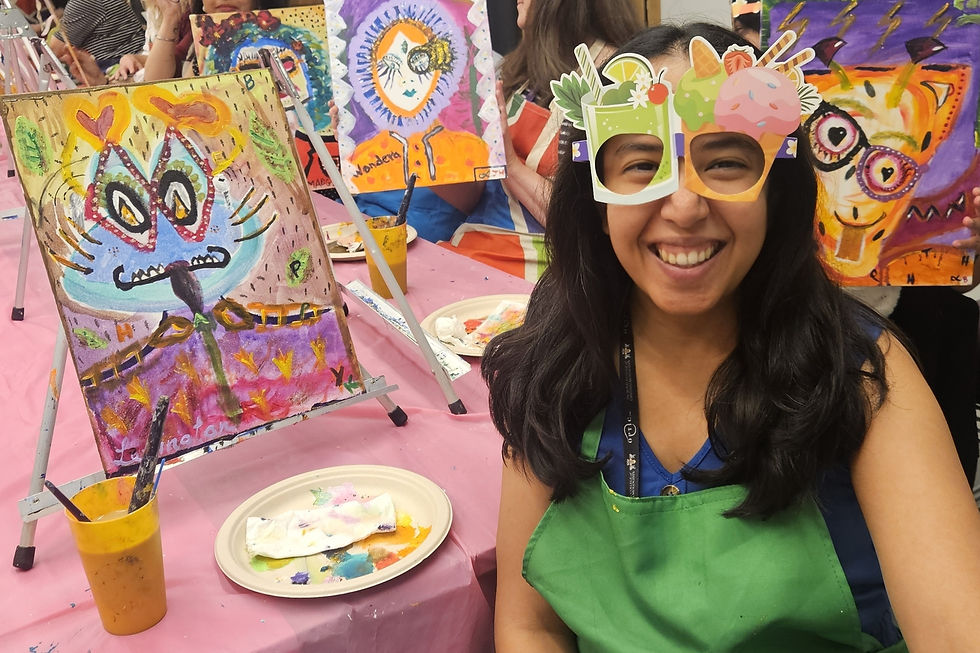
Published for World Art Day, 15 April 2026
Creative team building is becoming more valuable, not less, in the AI era.
Today is World Art Day. UNESCO's theme this year is A Garden of Expression: Cultivating Community Through Art, a reminder that creativity is not a solo act but a shared one. It belongs to everyone, not just trained artists or famous museums, and when communities create together, they become more open, more united, and more hopeful. Liputan6.
It is a fitting theme for the moment we are in.
Because while AI is rewriting how we work, the data on what makes teams thrive is moving in the opposite direction to what most people assume. The more powerful the technology becomes, the more valuable human creativity becomes. And the companies paying attention are already shifting how they invest in their people.
The skill that the next decade actually rewards
The World Economic Forum's Future of Jobs Report 2025 surveyed more than 1,000 of the world's largest employers, representing 14 million workers across 55 economies. Analytical thinking remains the most sought-after core skill, but creative thinking, resilience, flexibility and agility, along with curiosity and lifelong learning, are all expected to continue rising in importance over the 2025 to 2030 period, according to the World Economic Forum.
The Forum is even more direct elsewhere: while AI and big data dominate the technical skills list, the evolving landscape underscores the enduring need for uniquely human abilities like creativity, critical thinking and adaptability, World Economic Forum.
Translation for anyone planning team development: the skills that make your people irreplaceable are the same skills that get sharpened every time they create something with their hands.
What art actually does to the brain
This is not wellness theatre. The biological evidence is genuinely strong.
A study from Drexel University's College of Nursing and Health Professions measured cortisol, the body's primary stress hormone, in 39 adults before and after 45 minutes of art-making. 75 per cent of participants showed lowered cortisol levels, and there was no correlation between past art experience and lower levels, according to ScienceDaily. In other words, your finance lead who insists they "cannot draw" benefits exactly as much as the colleague who paints at weekends.
The lead researcher's takeaway was that everyone is creative and can be expressive in the visual arts when working in a supportive setting at Drexel. That last phrase, in a supportive setting, is the whole game. It is why a tailored, professionally facilitated session works and a "do something creative at your desk" Slack message does not.
Neuroscience research adds another layer. Creativity does not live in any single brain region. It relies on collaboration among several networks, including the executive control network, the default mode network associated with mind-wandering, and the parietal cortex associated with moments of insight. What researchers see in creative professionals and through creativity training is that the ability to switch between these networks improves BrainFacts.
That ability to switch, to move between focus and wandering, between structure and exploration, is exactly the cognitive flexibility every leadership framework is now asking for. For modern companies, creative team building also helps teams strengthen communication, collaboration and confidence in a more human way.
Why this matters more in the AI era, not less
Here is the uncomfortable truth most teams have not yet absorbed.
Tools like ChatGPT, Midjourney and Claude can now produce competent first drafts of almost anything. As humans handle more AI-supported tasks, they will need to act as sense-makers and take creative action through brainstorming and divergent thinking (ScienceDirect). The advantage shifts from those who can execute to those who can judge, frame, connect and originate.
There is also a quieter risk. Research has flagged the danger of AI hindering human thinking, with some users showing difficulty coming up with ideas beyond what the AI offered, suggesting potential for cognitive fixation and reduced confidence in their own creative thinking ScienceDirect. If your team's creative muscles are not being used, they are quietly atrophying.
This is the case for hands-on creative experiences. Not as a perk. As a deliberate counterweight to a working life increasingly mediated by screens, prompts and prediction engines. Unlike traditional activities, creative team building creates space for reflection, shared vulnerability and genuine connection.
What a creative team development session actually changes
When a team paints together, three things happen simultaneously that almost no other team-building format can deliver.
Stress drops measurably and quickly, freeing people to actually engage with one another.
Communication patterns shift because side-by-side creative work removes the meeting-room hierarchy and puts everyone at the same starting line.
And the brain networks behind insight, collaboration, and divergent thinking get a workout that translates directly into how your team approaches problems on Monday morning.
The transformative bit is not the painting. It is what becomes possible because of the painting. That is why creative team building is no longer just a nice extra, but a strategic part of team development.
The invitation
This World Art Day, the question worth asking is not whether your team would enjoy a creative session. They almost certainly would. The better question is whether your team development strategy is keeping pace with the era in which your people are actually working.
Creative team development is no longer a nice-to-have. It is one of the most evidence-backed, future-proof investments you can make in the people who will need to outthink, out-imagine and out-collaborate the machines for the rest of their careers.
Ready to design a session built around your team's goals? Tell us about your team, and we'll design the perfect experience.


